







パブコメ)#ソテツシロカイガラムシ #CAS #Amami #Okinawa 生態系等に被害を及ぼすおそれのある外来種リストのランクを「要監視」から「要防除」に
2026/04/30
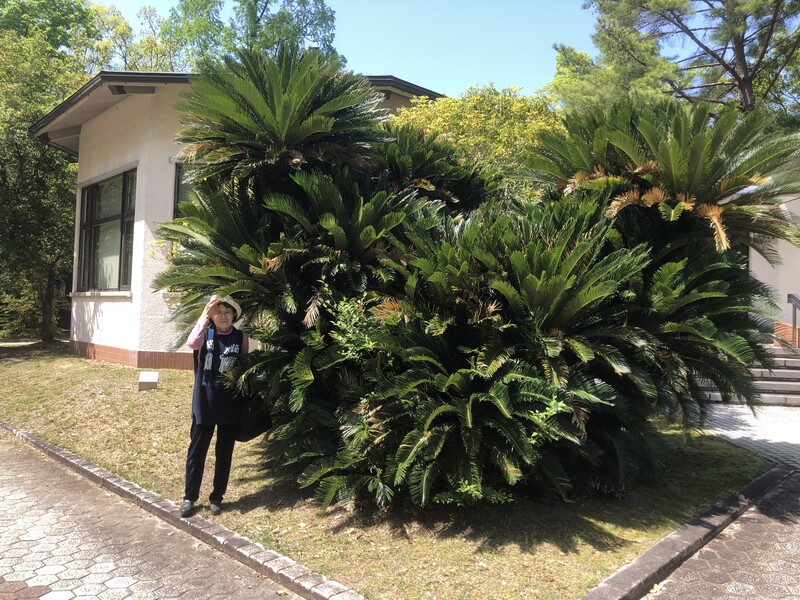
山口市亀山公園の元気なソテツ
2026年5月2日締め切りのパブコメに、本日安渓貴子が意見を提出しました。
https://public-comment.e-gov.go.jp/servlet/Public?CLASSNAME=PCMMSTDETAIL&id=195260001&Mode=0
我が国の生態系等に被害を及ぼすおそれのある外来種リスト(動物) (案)…資料2」について、
外来種リスト(案)の昆虫類23にソテツシロカイガラムシ(CAS)があります。「防除検討外来種」で、「被害の大きさが防除推進外来種に及ばないもの」というランクですね。このランクを「防除推進外来種」の取り扱いにしてください。
ソテツ(Cycas revoluta)は、奄美・沖縄地域では救荒植物であり、天然分布の他にも田畑や山野に植えるなどして、文化的にも、景観の上でも重要な役割をもってきました(安渓・当山、2015)。
しかし現在奄美群島では、ソテツシロカイガラムシ(CAS)によって、ソテツ群落全体の枯死が起きています(Englehardtet al.2024、高梨裕行 2023など)。奄美大島はほぼ壊滅状態、沖縄本島でも広がりつつあります。
Takagi, S.(2023)の報告でも、日本の奄美大島において、ソテツにソテツシロカイガラムシによる深刻な被害が確認された。このカイガラムシは、近年世界中の多くの地域に侵入しており、現在ではソテツ類にとって世界的な壊滅的害虫として知られているとあります。CASは、ソテツが複雑な構造(形態)をもち、地下部の根にも深く侵入することなど、見つけにくく、潜在的に広がる可能性があります。また、広がる速度が大きいことも危惧される理由です。
植樹されたり、栽培されているソテツも、全国にあり、重要な文化財です。記念物などに指定されている・いないにかかわらず、これらへの蔓延を未然に防ぐため、早急な対応が必要です。
引用文献
・安渓貴子・当山昌直 (2015).『ソテツをみなおす;奄美・沖縄のソテツ文化誌』ボーダーインク
・Englehardt, J.D., et.al. (2024), "Threats to cycad biocultural heritage in the Amami Islands, Japan"、Plant Species Biol. Vol.40;1-19. DOI: 10.1111/1442-1984.12494
・高梨裕行 (2023). 鹿児島県奄美大島における外来カイガラムシによるソテツの被害と今後に向けての提言https://22octmove.up.seesaa.net/image/fetchAttachment-3.pdf
・Takagi, S. (2023). Outbreak of Aulacaspis yasumatsui in Japan (Sternorrhyncha: Coccoidea: Diaspididae). Insecta Matsumurana (New Series), 79, 81-84.
A public comment sent to the Minstry of Environment, Japan,
regarding “List of Invasive Species (Animals) That May Cause Damage to Japan’s Ecosystems, etc. (Draft)… Document 2,”
The Cycas White Scale (CAS) is listed as Insect No. 23 in the draft list of invasive species. It is classified as an “invasive species under consideration for control,” which is a category for species “whose damage does not reach the level of those designated as ‘invasive species requiring control measures.’” Please reclassify this species to be treated as an “invasive species requiring control measures.”
Cycas revoluta has served as a famine-relief plant in the Amami and Okinawa regions. In addition to its natural distribution, it has been planted in fields and hillsides, playing an important role both culturally and in the landscape (Ankei & Toyama, 2015).
However, in the Amami Islands today, the entire Cycas population is dying off due to the Cycas scale insect (CAS) (Englehardt et al. 2024; Takagi, S. 2023, etc.). The situation on Amami Oshima is nearly catastrophic, and the infestation is spreading on the main island of Okinawa as well.
A report by Takagi, S. (2023) also confirmed severe damage to Amami Oshima's Cycas trees caused by the Cycas scale insect. This scale insect has invaded many regions worldwide in recent years and is now recognized as a globally devastating pest for Cycas species. CAS is difficult to detect because cycads have complex structures (morphology) and the scale penetrates deep into the underground roots, making it prone to potential spread. Another cause for concern is its rapid rate of spread.
Cycads, whether planted or cultivated, are found throughout the country and are important cultural assets. Regardless of whether they are designated as monuments or not, urgent action is required to prevent the spread of this pest before it occurs.
提出完了
我が国の生態系等に被害を及ぼすおそれのある外来種リスト」改定案に対する意見の募集(パブリックコメント)について への意見を次の受付番号で受け付けました。
お問い合わせの際には受付番号が必要です。
受付番号
195260001055737041
